The Deepwater Difference: Coral Ridge and Lighthouse Point
Two neighborhoods, two kinds of waterfront life. Choosing between them starts not with the house, but with an honest look at the boat in your slip and the route it has to take to open water.
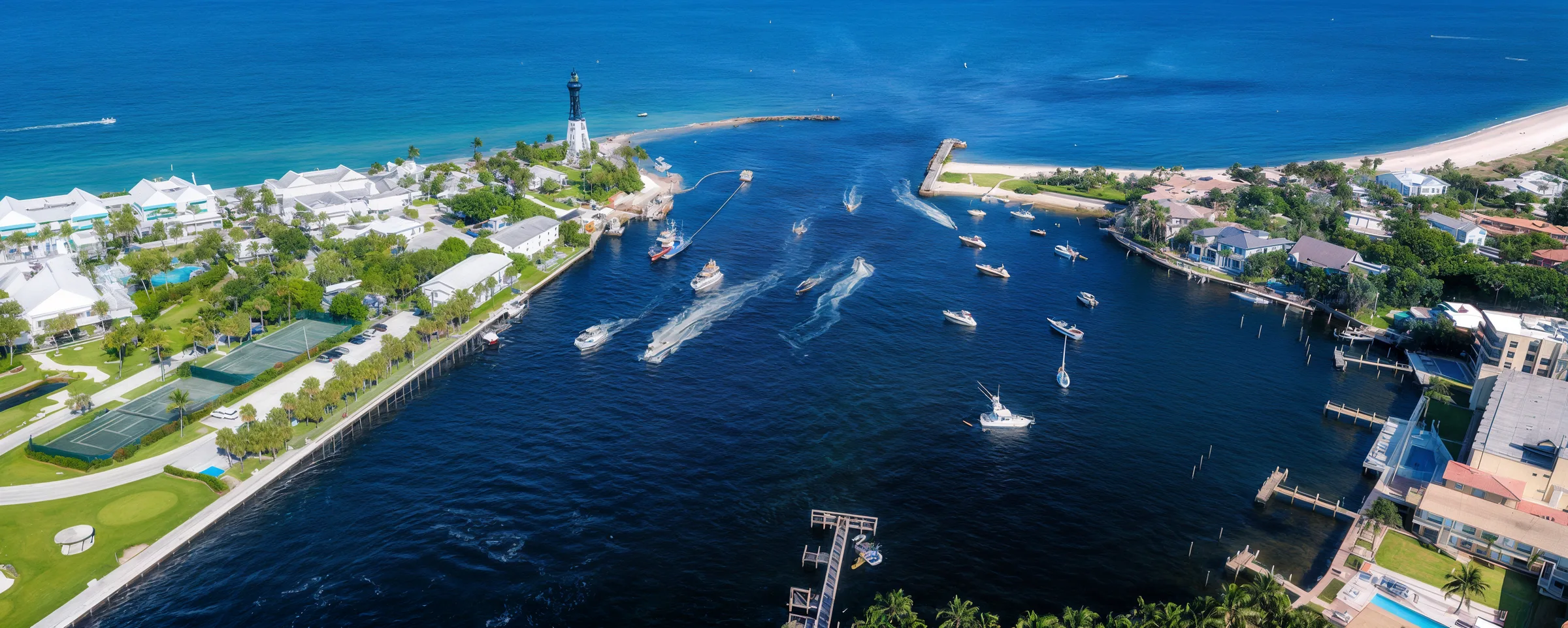
I live in Coral Ridge, and I sell throughout Lighthouse Point, and the question I am asked most often is which one is better. It is the wrong question, and I say that gently, because the honest answer is that they are different instruments for different lives on the water. The right question is which one fits your boat, your routine, and the pace you actually want.
Let me walk you through both the way I would if we were driving the canals together, because that is genuinely how this decision should be made.
Coral Ridge: deepwater access with a neighborhood you can live in
Coral Ridge solves a problem that most waterfront neighborhoods do not. It gives you true deepwater access without asking you to trade away livability. The canals connect directly to the Intracoastal, and from many properties you can reach open ocean through Port Everglades in under fifteen minutes. For a working boater, that matters more than almost anything else.
What sets it apart is the feel. The streets are quiet, the lots are generous, and you are not living inside the density or the constant activity you find closer to Las Olas or across the county line in Miami Beach. You can start your morning on the dock, take a run before the afternoon wind picks up, and still be ten minutes from downtown when you want the city.
As of early 2026, the median list price in Coral Ridge sat around $1.79 million, roughly $812 per square foot, against a broader Fort Lauderdale median closer to $658,000. That premium is not a mystery. It is location, water access, and the scarcity of an established neighborhood where new inventory almost never appears.
That precision is worth sitting with. Today's Coral Ridge buyer is educated and detail-oriented. They understand canal depth, ocean-access routes, and seawall condition, and they price those things into their offers. Well-prepared homes that align with those expectations still generate strong, clean activity. Homes that do not sit — and in this market, sitting tells the next buyer everything.
Lighthouse Point: a boater’s town, quietly
Drive fifteen minutes north and the character shifts. Lighthouse Point is smaller and more deliberately residential — a little over two square miles, incorporated in the 1950s, with a median age around fifty-six and a homeownership rate near eighty percent. Those numbers translate into something you feel immediately: quiet streets, few short-term patterns, and a rhythm built around long-term living.
For boaters, the appeal is more than eighteen miles of canals with, in many locations, no fixed bridges between your dock and the Hillsboro Inlet. No fixed bridges is the phrase that matters. It means a taller vessel or a sailboat is not held hostage to bridge clearance or a tide schedule. The Lighthouse Point Yacht Club and the proximity to the inlet give the town a genuine marine culture that has nothing to do with prestige and everything to do with time on the water.
Roughly eighty percent of the housing is single-family, in styles from Mediterranean villas to modern waterfront estates. The waterfront inventory carries a median list around $799,000, though the deepwater estates with dockage for serious yachts climb well beyond that. It is, in the best sense, a place where people actually use their boats.
The vocabulary that governs the decision
Here is where I earn my role. Whichever neighborhood draws you, the same technical realities decide whether a specific home works for a specific boat. These are not checkboxes. Treat them as such and you can end up with a house that photographs beautifully and does not run smoothly.
What we verify before you fall in love
- Draft. How much water your vessel needs underneath it, matched against the depth near the seawall and along the entire route. In Coral Ridge, canals commonly run six to ten feet, but it varies property to property.
- Dockage specifications. Beam, length, and turning radius decide whether a slip works in practice, not just on paper. A dock that fits on a listing sheet may not fit your approach.
- The ocean-access route. Every bridge, its clearance, and whether any of them are fixed. This is the single detail that most often separates a home that suits your boat from one that does not.
- Seawall condition. A quiet but consequential expense, and increasingly a negotiating point when an inspection surfaces work that needs doing.
- Wake and no-wake dynamics. They shape your transit time, your daily comfort, and the wear that accumulates on the boat over years of ownership.
Even a home with a private dock sometimes points toward a marina, and that is not a failure of the property. A managed slip at a place like the local yacht club or a nearby marina adds flexibility for a larger second vessel, for seasonal changes, or simply for the consistency of professional dock staff. The two can complement each other.
So which one
If you want deepwater capability with a genuine neighborhood around it, close to the energy of the city, Coral Ridge tends to be the answer. If you want a quieter, settled, unmistakably boating-first town with easy inlet access and, in many spots, no fixed bridges, Lighthouse Point is hard to beat. Both are among the more resilient waterfront markets in the region, for the same underlying reason: the water is finite, the neighborhoods are established, and new inventory is rare.
The best purchase I can help you make is the one where the route, the depth, and the dock fit align with how you actually use a boat. That is not something you can read off a listing. It is something we confirm together, ideally before you have already decided in your heart. When boating is the point, the boater-aware read is the whole difference.

I live these neighborhoods, and I am happy to walk the canals with you, map the exact inlet route from a prospective dock, and make sure a home fits the boat before you make a move. That walk is one of my favorite parts of this work.